

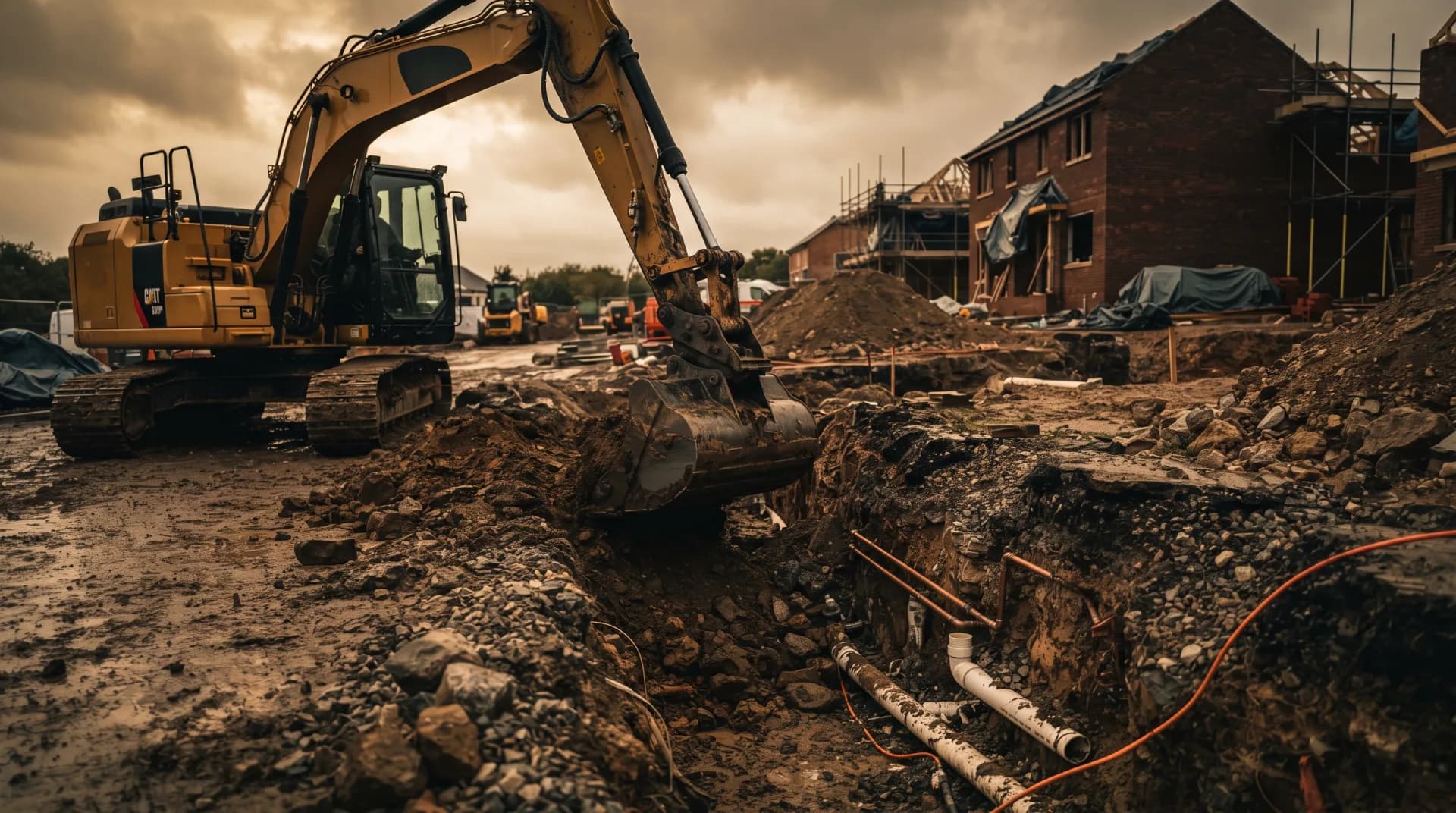
Plumbing excavation in Montreal
Plomberie Nova digs to repair or replace buried water, sewer and drain lines across Montreal and Greater Montreal, locating the problem first so only the section that needs it is opened.
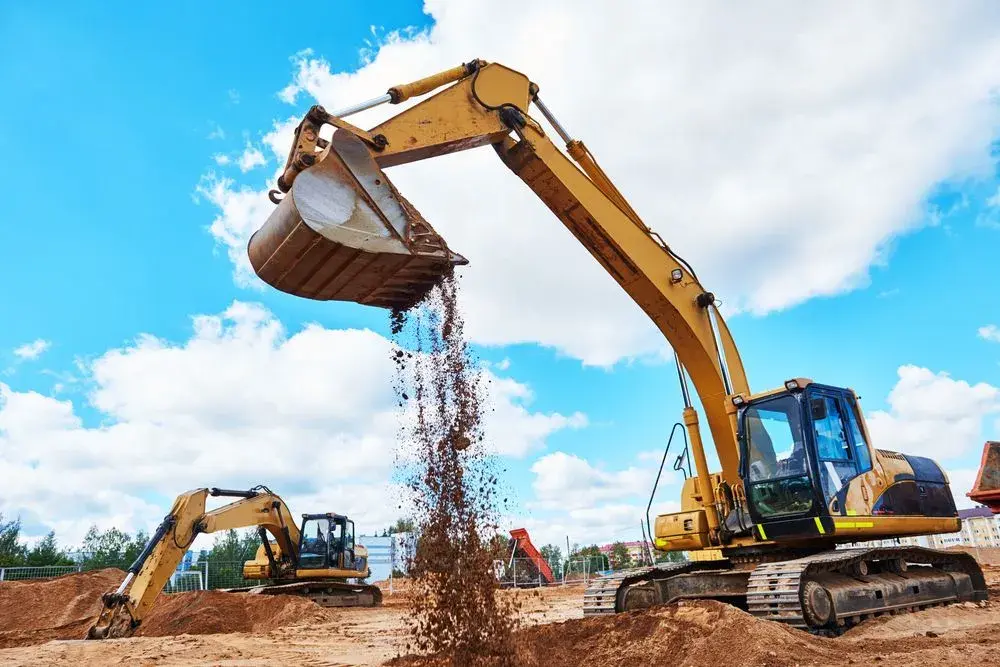
When is digging the only real fix?
Some problems cannot be solved from inside the pipe. A sewer line crushed by tree roots, a drain that has sagged out of slope, a water entry from the 1960s that has reached the end of its life — clearing them buys a few months at best.
- Broken or collapsed sewer lines
- Root intrusion that keeps coming back
- Water entry replacement
- Backwater valve installation
- French drain and foundation drainage
A camera inspection comes first, always. We show you what is actually under the ground before anyone starts digging — so the excavation is as small as the problem allows, and the ground goes back the way it was.
Why hire a licensed excavation contractor?
Damage prevention
Pipe replacement done to last
Site safety
Lower long-term cost
Proper equipment
Plomberie Nova, your trusted contractor
We look before we dig
Camera inspection and locating first. The dig follows the diagnosis, not a guess.
Licensed and accountable
RBQ 5795-3739-01, CCQ 876-863. Excavation touches code, permits and your foundation — it is not a job for an unlicensed crew.
Clear scope, clear price
You know what is being replaced, how long the site stays open, and what the ground looks like when we leave.
Restoration included
Backfill, compaction and surface restoration are part of the job, not an afterthought.
What to know before digging
Signs that the problem is underground
A localised dip in the ground, an unexplained damp-soil smell, water pressure dropping throughout the house, or a water bill that climbs with no change in habits are signals that often point to a faulty buried line rather than a fixture above ground. Backups that keep returning despite regular unclogging can also indicate a sag or a crack further along the drain.
Why these lines eventually fail
Buried water, gas and drain lines are exposed to the ground freezing and thawing, a cycle that is particularly hard on piping in Quebec. In Montreal's older areas, cast-iron or lead lines installed decades ago corrode over time, and clay drains crack, letting tree roots in until the line is completely blocked.
How we work before, during and after
Before digging, our team pinpoints the faulty line, often with a camera inspection, to limit the excavation to the area that actually needs it. The other buried services nearby — gas, electricity, telecommunications — must also be located before work begins; that step is not optional, whatever the size of the job.
Once the line is exposed, we repair or replace the affected section, then backfill and restore the site — lawn or asphalt, depending on what was there. The work is documented, which can be useful for an insurance file or a municipal compliance process.
Emergency or planned project?
A ruptured water line losing a lot of water, or ground subsidence that is becoming dangerous, are urgent situations. Preventive replacement of an ageing water service line that still works, on the other hand, can be planned without pressure — it is even preferable, so the break does not happen at the worst possible moment.
The water service line, the most common case
The line that brings water from the street to the house is the part we replace by excavation most often. In neighbourhoods built before the 1970s, it is sometimes still lead or cast iron: pressure dropping throughout the house, water that takes a while to run clear in the morning, or a water bill that climbs for no reason are the most common signals.
The replacement is done in a single trench, from the property line to where the line enters the building. The connection to the municipal system is coordinated with the City — a process separate from ours, and we tell you from the start which of the two portions concerns you.
Where our team digs
Our shop is on April Street, in Montreal's east end, and our excavation work is concentrated around it: Rivière-des-Prairies, Pointe-aux-Trembles, Montreal North and Anjou, then the east of the island and the north and south shores depending on the job. A broken water line cannot be scheduled: emergency calls are taken 24 hours a day, 7 days a week.
Frequently asked questions
Does replacing a water line always mean digging?
The section under your property does. An indoor valve can be replaced without excavation — we establish which of the two is actually failing before anyone talks about a trench.
Who pays for the part under the street?
The portion on your property, between the street and the building, is generally yours as the owner. The part under the street, up to the city connection, belongs to the city. Digging near the street also requires municipal authorisation, which is a separate matter from who pays.
Do you handle buried gas lines as well?
Yes, along with water and drainage lines. Locating the other buried services is mandatory before any digging, whatever the line involved — that step is never optional.
Do I need a permit to excavate on my property?
It depends on the location and the scale of the work — digging near the street or the sidewalk generally requires municipal authorisation. We help you clarify what applies to your situation before starting.
How long does it take to restore the ground after excavation?
It depends on the scale of the work and the surface to restore — lawn and asphalt do not take the same time. We give you a clear picture once the extent of the work is confirmed.
Excavation done right
A permanent fix, not another temporary one
If a drain keeps backing up no matter how often it is cleared, the answer is usually underground. Plomberie Nova diagnoses it, digs it, replaces it and puts the ground back.
Request a free quote